
From images to profiles to predictions, with three speakers on how it's done at scale
Cell Painting can produce thousands of morphological features from a single plate. The hard part is turning those images into profiles you can trust, and profiles into predictions you can act on. We'll walk through that full path, from bench to prediction.
This webinar is for scientists in early discovery, predictive toxicology, and translational safety, plus anyone evaluating new approach methodologies for their pipeline.
We start with the practical side of phenomics: how a Cell Painting experiment is actually run at scale, what automation changes about reproducibility, and where human error and batch effects creep in. From there we move to the data layer, where AI is used to extract information from images, compress it into morphological profiles, and generate hypotheses from datasets far too large to inspect by hand.
We close on applications. Combining morphological profiling with other data types, including transcriptomics, improves predictive power for compound activity and safety. We'll look at what that means for earlier toxicity flagging and more human-relevant decision-making, and how it comes together in ToxOracle.
Three speakers, roughly 15 minutes each, followed by live Q&A.
Speakers
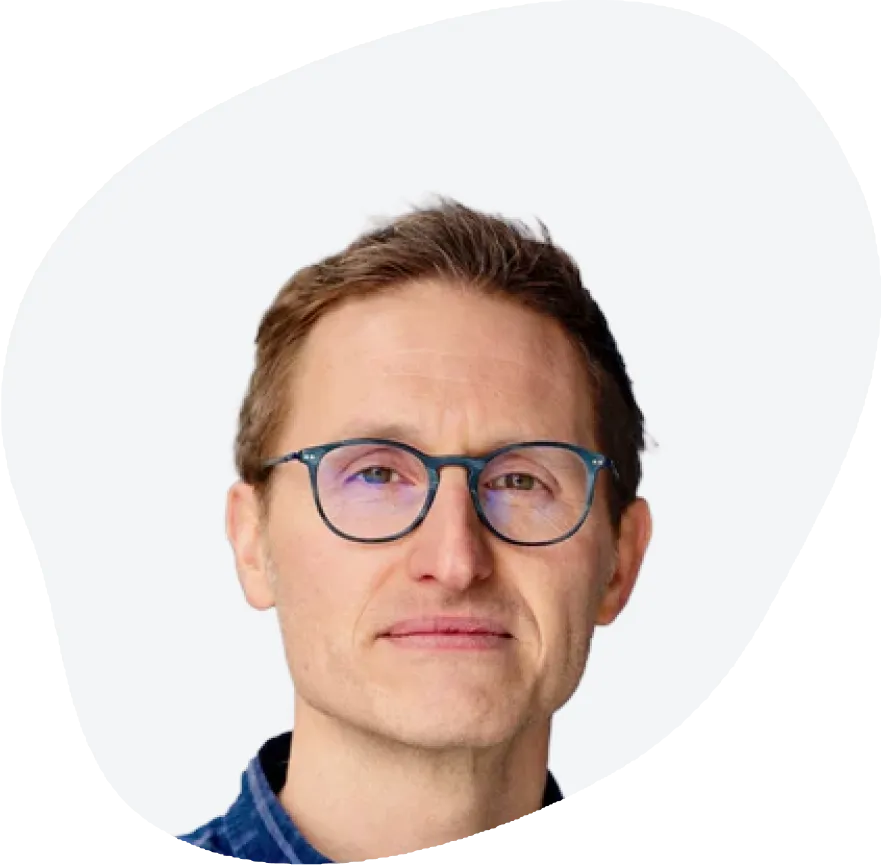
Jordi Carreras-Puigvert is Chief Scientific Officer & co-founder of Pixl Bio and an Associate Professor at Uppsala University. His work centers on image-based phenomics and AI for drug discovery, including co-authoring a 2024 field review on Cell Painting. Before Pixl Bio, he led the CBCS Uppsala unit at SciLifeLab, where he helped establish Cell Painting as a national service, and contributed to the pharmb.io program advancing high-content imaging and automation. His research and collaborations span mechanism-of-action prediction, toxicity profiling, and data-driven screening—bridging advanced microscopy with machine learning to accelerate therapeutic discovery.

Ola Spjuth is Professor of Pharmaceutical Bioinformatics at Uppsala University, where he leads Pharmb.io, a research group integrating AI and machine learning with drug discovery and chemical safety. He is Chief AI Officer (CAIO) & co-founder of Pixl Bio. His lab combines in silico modeling with robotized high-content imaging and modern IT infrastructure to generate and analyze large-scale data for screening, toxicity, and mechanism-of-action studies. He publishes widely (5,600+ citations) and advances methods such as conformal-prediction modeling (e.g., CPSign). Previously, he co-directed UPPMAX and headed SciLifeLab’s Bioinformatics Compute & Storage facility, building national capabilities in scientific computing. Current work spans intelligent experiment design and AI for high-content imaging, including recent reviews on how deep learning accelerates image-based drug discovery.He helped launch multiple ventures including Scaleout Systems and Prosilico.
What you’ll hear about
- How large-scale Cell Painting is run in practice, and what it takes to keep it reproducible
- How images become morphological profiles, and where AI does the heavy lifting in between
- Where AI plus morphological data has already led to real discoveries
- How phenomics supports earlier, more human-relevant safety decisions