

Inside the technology that turns cells into predictions
Built to be human-relevant, automated, and precise






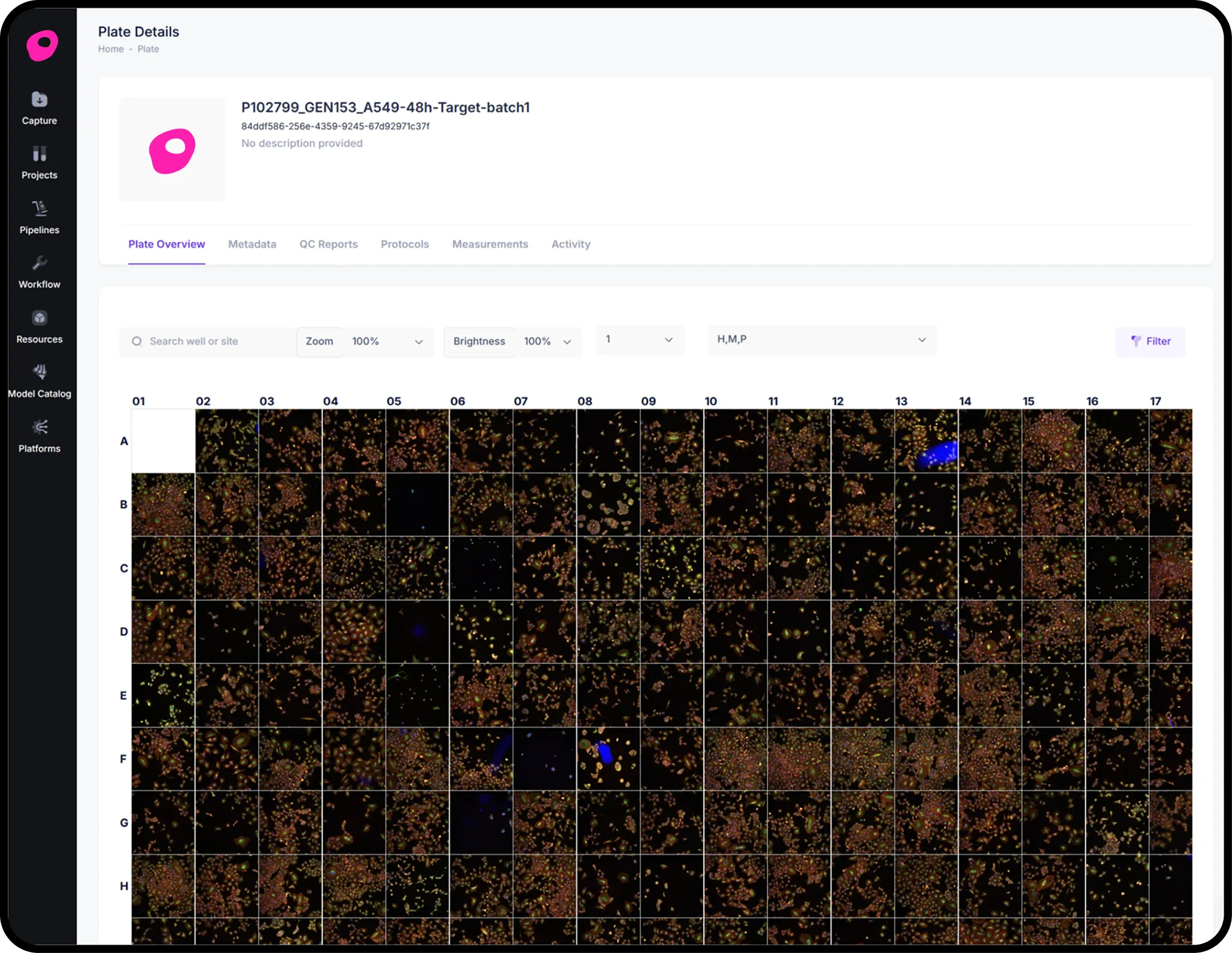





Clarity and consistency at scale

Reactive guesswork, or predictive intelligence
“pixlbio’s unique combination of large scale automated Cell Painting capability, the high quality of the generated data, as well as their expertise in AI and predictive modelling, made them an obvious choice for AstraZeneca.”

“pixlbio, was selected for the Sanofi iDEA-TECH Awards Program to receive Sanofi’s support for its project due to their demonstrated ability to develop high-quality predictive models from their exceptional data. Within the funded project, the pixlbio team showcased profound expertise in Cell painting for morphological profiling, automation, AI and predictive modelling, which truly validates them as deserving awardees.”

“pixlbio’s cellular models have significantly improved our Go-No/Go translational decisions across multiple programs over the years at Deep Genomics. The hepatic cell systems are far superior and physiologically relevant compared to commonly used cell lines. More recently, we have begun testing disease variant carrying models, further improving translatability of our screening systems. Working with both the BD and technical support teams at pixlbio has been an excellent experience. Response times have been very fast and technical support and information provided has been above and beyond on a regular basis. We are looking forward to working on additional systems coming from the pixlbio team.”